
In today’s construction and design industry, clients buy from visual confidence.
Before a single brick is laid, people want to see the future. They want to walk through spaces, feel the atmosphere, understand proportions, and emotionally connect with the project long before construction begins.
That is why 3D rendering has become one of the most powerful tools in modern architecture, real estate, and construction marketing.
At Atiq, we’ve seen how builders, developers, architects, and interior designers use high-quality architectural visualisation to turn uncertainty into excitement and excitement into signed contracts.
This article explores how builders use 3D renders to win more clients, why clients trust visuals more than technical drawings, and how CGI is reshaping the future of architecture worldwide.
Why Clients Say “Yes” Faster When They See a 3D Render
Imagine explaining a dream home using only floor plans.
Now compare that to presenting:
- A cinematic exterior render at sunset
- A realistic kitchen visualisation
- Warm interior lighting
- Landscaping and textures
- Furniture layouts
- Real-life materials and finishes
One creates confusion.
The other creates desire.
Modern clients are visual buyers. Studies across architecture and real estate marketing consistently show that visual content improves engagement, trust, and conversion rates online. Search demand for terms like “3D architectural rendering,” “architectural visualisation,” “modern house design,” and “interior rendering services” continues to grow globally as more clients research projects online before hiring professionals.
Today, builders are no longer just selling construction.
They are selling a vision.
What Exactly Is a 3D Architectural Render?
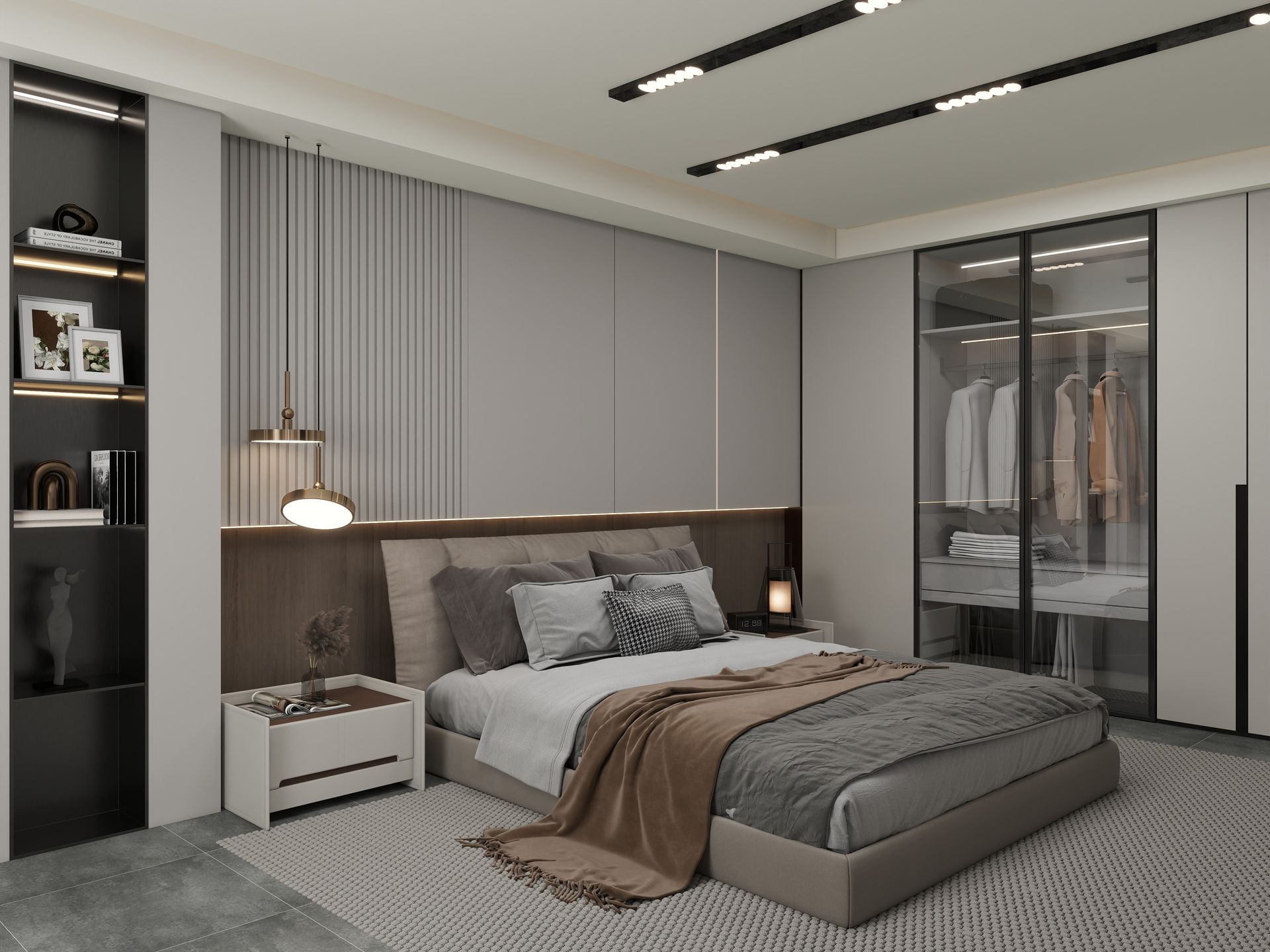
A 3D render is a photorealistic digital visualisation of a proposed space or building before it is built.
It allows clients to experience:
- Exterior architecture
- Interior design
- Lighting moods
- Materials and textures
- Furniture arrangements
- Landscaping
- Kitchen concepts
- Spatial flow
At Atiq, our 3D visualisation process transforms technical ideas into immersive visuals that clients can instantly understand, whether the project is in Nairobi, Mombasa, London, Dubai, or New York.
7 Powerful Ways Builders Use 3D Renders to Win More Clients
1. They Turn Abstract Ideas Into Emotional Experiences
Most clients cannot fully interpret architectural drawings.
Floor plans make sense to architects and engineers but to the average client, they can feel overwhelming and technical.
A 3D render removes that barrier.
Instead of imagining the result, clients can experience it visually.
That emotional connection dramatically increases trust and decision-making speed.
Why this matters:
People buy emotionally first, then justify logically.
A beautiful render creates immediate excitement.
2. Builders Use Renders to Pre-Sell Projects Before Construction Starts
One of the biggest advantages of CGI visualisation is the ability to market unbuilt projects.
Developers now use renders to:
- Launch real estate projects early
- Secure investors
- Generate off-plan sales
- Market apartments before construction
- Create social media campaigns
- Build websites and brochures
This strategy is especially powerful in competitive urban markets where buyers want confidence before investing.
Photo-realistic rendering allows builders to begin selling the dream while the project still exists only as an idea.
3. 3D Visuals Help Builders Look More Professional
Presentation quality matters.
A builder with high-end visual presentations instantly appears:
- More established
- More trustworthy
- More premium
- More detail-oriented
Clients often judge capability based on how clearly a project is communicated.
This is why top developers invest heavily in architectural visualisation.
In many cases, the render becomes the builder’s strongest marketing tool.
4. Renders Reduce Costly Design Mistakes
3D visualisation is not only about marketing.
It also improves design decision-making.
Builders use renders to identify problems before construction begins:
- Poor lighting
- Material clashes
- Incorrect proportions
- Furniture spacing issues
- Kitchen workflow problems
- Unbalanced facades
Fixing these issues digitally is significantly cheaper than correcting them during construction.
This saves both time and money.
5. Clients Feel More Involved in the Design Process
Clients love participation.
When builders share visual previews, clients feel included in the creative journey.
They can comment on:
- Finishes
- Colours
- Layouts
- Lighting
- Furniture
- Spatial arrangement
This collaboration builds stronger relationships and increases client satisfaction.
The result?
More referrals.
More repeat business.
More trust.
6. Builders Use CGI to Dominate Social Media Marketing
Architecture has become highly visual online.
Platforms like Instagram, Pinterest, TikTok, and LinkedIn reward stunning visuals.
A single cinematic render can generate:
- Shares
- Website traffic
- Inquiries
- Engagement
- Brand recognition
In fact, visually rich architecture content performs exceptionally well in modern search and AI-driven discovery systems because users increasingly search through images and visual inspiration rather than text alone.
This is one reason architectural visualisation firms are becoming essential partners for modern builders.
7. High-Quality Renders Help Builders Win Competitive Bids
When multiple firms compete for the same project, presentation quality can become the deciding factor.
A polished 3D presentation helps builders communicate:
- Vision
- Attention to detail
- Design quality
- Construction understanding
- Brand identity
Clients naturally gravitate toward proposals they can clearly visualise.
And clarity builds confidence.
Why 3D Rendering Is Growing So Fast Worldwide
Search behaviour shows that clients increasingly research architecture and design services online before hiring professionals. High-intent searches now focus on:
- “architectural visualisation”
- “modern house design”
- “interior rendering”
- “kitchen design ideas”
- “3D rendering services”
- “architects near me”
- “home visualisation”
This shift explains why builders worldwide are investing more heavily in:
- CGI
- Virtual design presentations
- Interactive walkthroughs
- Photorealistic renders
- Digital marketing assets
The future of architecture marketing is visual.
And that future is already here.
The Difference Between Average Renders and Great Renders
Not all visualisations are equal.
A weak render can make even a brilliant design feel lifeless.
A great render captures:
- Atmosphere
- Emotion
- Human experience
- Natural lighting
- Material realism
- Storytelling
At Atiq, we approach visualisation as both technical precision and artistic storytelling.
Because the goal is not simply to show a building.
The goal is to make people feel something.
How Atiq Helps Builders and Designers Stand Out
At Atiq , we provide:
- Architecture
- Interior Design
- 3D Visualisation
- Kitchen Design
- Furniture Design CGI
We work with clients locally in Kenya and virtually worldwide, helping builders, developers, and homeowners transform ideas into compelling visual experiences.
Whether you need:
- Photorealistic renders
- Interior CGI
- Exterior visualisation
- Marketing visuals
- Concept presentations
- Kitchen renders
- Furniture CGI
our mission remains the same:
To turn imagination into environments people can truly see, feel, and believe in.
Great spaces always begin with great ideas.
In a world driven by visuals, the firms that present ideas beautifully are often the ones that win the project.
Book a free initial Consultation